.jpg)
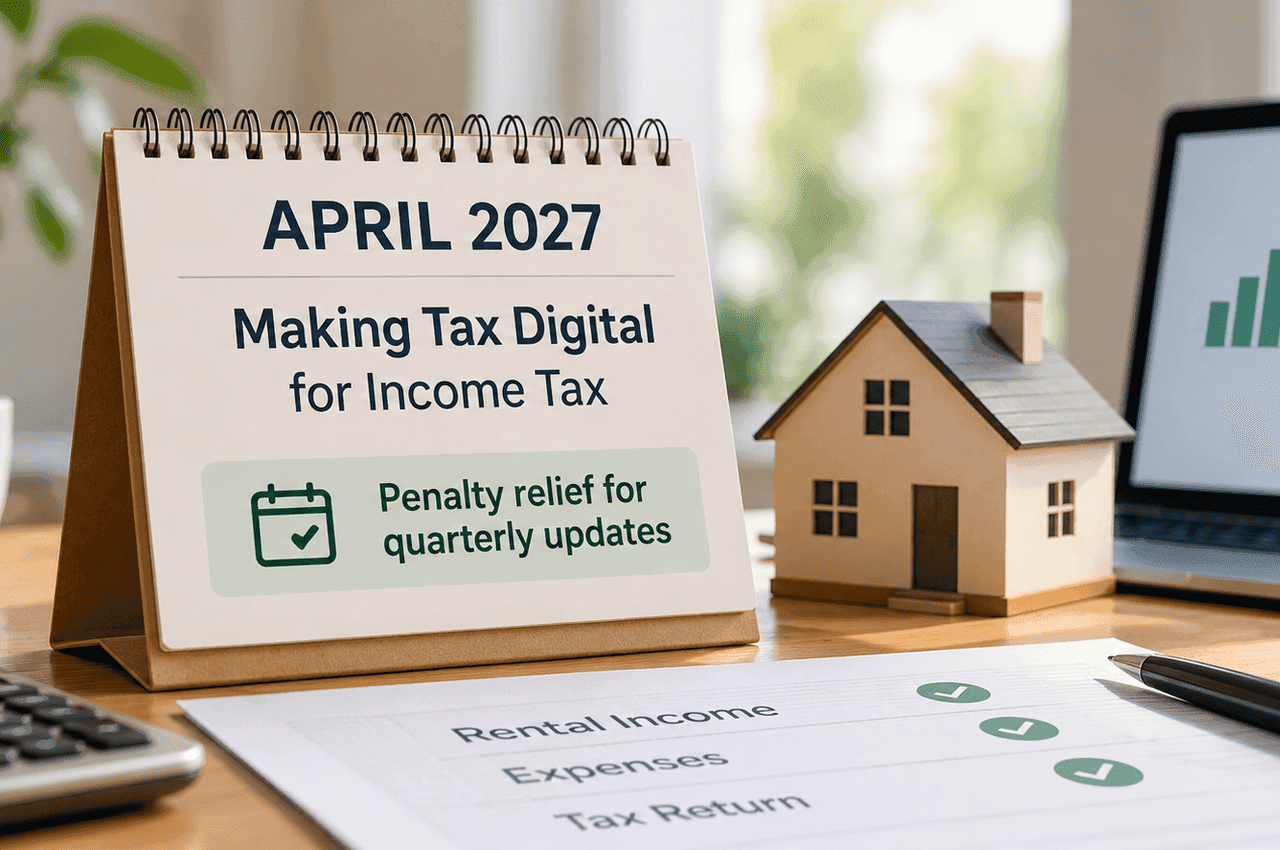
The Autumn Budget 2026 has announced a further penalty easement for landlords and sole traders joining Making Tax Digital (MTD) for Income Tax from April 2027. Under the new measure, HMRC will not issue late submission penalty points for quarterly updates relating to the 2027/28 tax year.
Announced on 28 October 2026, the measure gives newly mandated taxpayers additional time to adjust to quarterly digital reporting. It does not extend the existing easement for taxpayers who joined MTD in April 2026, whose first year of penalty relief ends with the 2026/27 tax year. However, MTD reporting requirements and filing deadlines remain unchanged.
Who Will Benefit From the MTD Penalty Relief?
The easement applies to taxpayers required to join MTD for income tax from 6 April 2027, when the qualifying income threshold falls to over £30,000.
Approximately 1.077 million additional landlords and sole traders are expected to fall within MTD from that date, based on their qualifying gross income from self employment and property.
These taxpayers will not receive penalty points for late quarterly updates covering the 2027/28 tax year.
What About Landlords Already Using MTD?
Landlords and sole traders with qualifying income above £50,000 have been required to use MTD since April 2026.
Their first year also benefits from relief against late quarterly update penalty points. However, this protection ends with the 2026/27 tax year.
From April 2027, late quarterly updates for this existing group will attract penalty points. Under HMRC's points system, reaching four points triggers a £200 penalty, with a further £200 charged for each subsequent missed submission deadline.
Do MTD Quarterly Updates Still Need to Be Submitted?
Yes. The Budget announcement removes late submission penalty points for qualifying quarterly updates, not the requirement to submit them.
Affected taxpayers must still:
Maintain digital records of income and expenses.
Submit quarterly updates using compatible software.
Complete their annual tax return by the applicable deadline.
Pay any tax due on time.
Late tax return penalties and late payment penalties remain applicable, subject to the relevant rules. HMRC also requires outstanding quarterly updates to be submitted before the annual tax return can be filed.
Conclusion: What Should Landlords and Sole Traders Do Next?
The penalty easement provides additional flexibility, but landlords and sole traders should continue preparing for the April 2027 MTD rollout.
Those entering MTD should check their qualifying income, arrange compatible software and establish a system for recording income and expenses throughout the year.
The Budget offers relief from quarterly update penalties, but it does not postpone MTD or remove the responsibility to comply with its reporting requirements.