.jpg&w=64&q=75)
.jpg)
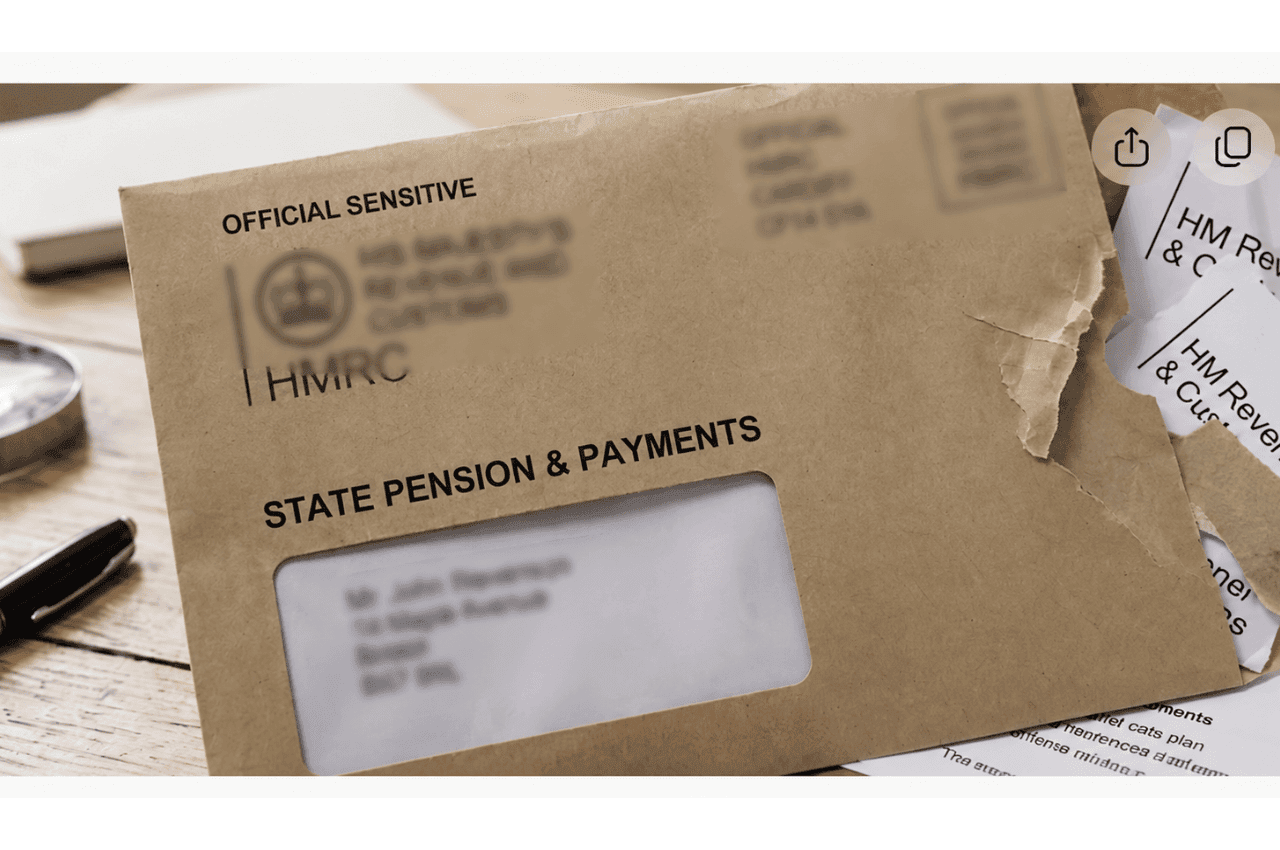
If you earned close to £12,570 in a recent tax year and paid into a pension at work, a letter may be on its way to you, and it will probably be the first you have heard of any of this. Nothing went wrong at your end. How much relief you got depended on an administrative choice your employer made when the scheme was set up, years before you joined it.
Below we cover why the gap existed, exactly how the amount is worked out, which pension schemes are even allowed to use net pay, what to do when the letter arrives, and how to tell a genuine letter from the scam version that will inevitably follow it.
What Is the HMRC Letter Campaign for Low Earners?
HMRC is contacting people who may qualify for the Low Earner's Pension Payment, a payment designed to compensate low paid workers who missed out on pension tax relief because their workplace pension used a net pay arrangement.
HMRC used to call this the low earner's anomaly. The problem was recognised years ago, a commitment to fix it came at the Autumn Budget 2021, and it now has a name and a delivery route.
According to the June 2026 issue of the employer bulletin, HMRC began contacting around one million eligible individuals directly from August 2026. Contact comes by post or through the Personal Tax Account. HMRC does the identifying, using information it already holds, so nobody has to put themselves forward.
Worth saying plainly, this letter is a notification about money owed to you, not a bill, a penalty or a compliance check.
What Is the Low Earner's Pension Payment?
The Low Earner's Pension Payment is a payment from HMRC to eligible workers who contributed to a workplace pension under a net pay arrangement but did not receive the same tax relief benefit available to pension savers in a relief at source scheme.
HMRC's stated purpose is short. In pension schemes newsletter 184, HMRC says the payment helps make sure low earners achieve similar outcomes whether their workplace scheme operates relief at source or a net pay arrangement. It applies from the 2024/25 tax year onwards, with eligibility assessed separately each year.
The legal basis is section 193A of the Finance Act 2004, which places a duty on HMRC to pay the difference. That section was substantially rewritten by the Registered Pension Schemes (Net Pay Arrangements) Regulations 2026, SI 2026/671, which came into force on 14 July, 2026.
Why Did Some Low Earners Miss Out on Pension Tax Relief?
All of this comes down to one technical difference in how workplace pensions deliver tax relief. There are two methods. They behave identically for a taxpayer and very differently for somebody who pays little or no tax.
You do not get to choose which one applies to you. HMRC confirms in the June 2026 employer bulletin that relief at source has been the default for all new registered pension schemes since April 2006, and that an employer can only elect to operate a net pay arrangement at the start of a new scheme. Once the scheme is registered, the method is fixed.
How Does a Net Pay Arrangement Work?
Under a net pay arrangement, your employer deducts the pension contribution from your gross pay before operating PAYE. Your taxable pay falls, so your tax bill falls. HMRC describes this in the Pensions Tax Manual at PTM044230 as giving full relief at the marginal tax rate, received up front and without any claim.
That system works cleanly for anyone paying Income Tax. The problem starts when there is little or no tax to reduce.
Take someone earning £12,000 a year, below the £12,570 Personal Allowance:
Item | Amount |
|---|---|
Annual salary | £12,000 |
Pension contribution | £500 |
Income Tax before the contribution | £0 |
Income Tax after the contribution | £0 |
Immediate tax saving | £0 |
The £500 still reached the pension. The relief did not, because there was no tax bill to take it off.
How Is Relief at Source Different?
Relief at source works the other way round. Your employer deducts the contribution after Income Tax has been charged, and the pension provider claims the basic rate equivalent from HMRC and adds it to your pot.
HMRC's own example in the June 2026 employer bulletin puts it plainly. An individual making a relievable contribution of £100 actually pays £80 out of their pay after PAYE. The provider then claims £20 from HMRC's Pension Scheme Services and adds it to the pension pot.
Item | Amount |
|---|---|
Paid by the employee | £80 |
Claimed from HMRC by the provider | £20 |
Total added to the pension | £100 |
The important part is that HMRC pays that £20 whether or not the individual is a taxpayer. So a non taxpayer in a relief at source scheme still gets the top up.
Why Was This Considered Unfair?
Two workers on the same pay, paying the same contribution, could end up in different positions for one reason only. Their employers had set up different pension tax relief mechanisms. Neither worker chose it and most would never have known the choice existed.
The gap also lands on a predictable group. Automatic enrolment brings people into a workplace pension from earnings of over £10,000, while the Personal Allowance sits at £12,570. HMRC estimates that women make up 75% of those earning below the Personal Allowance and contributing to a pension scheme that uses net pay arrangements.
That is the gap the Low Earner's Pension Payment closes.
Who Is Eligible for the HMRC Pension Top Up?
You may be eligible if you contributed to a workplace pension using a net pay arrangement and did not receive the full Income Tax relief on those contributions.
HMRC's June 2026 employer bulletin sets out two practical conditions. An employee may be eligible if, in any tax year from 2024/25 onwards, they earned close to the Personal Allowance, typically £12,570, and contributed to a workplace pension through a net pay arrangement scheme.
Eligibility is assessed separately for each tax year, and individuals may qualify for one year or several.
What the Legislation Actually Says
The £12,570 figure is only a useful guide. It is not the actual legal test.
Under section 193A of the Finance Act 2004, HMRC compares the pension tax relief you actually received under a net pay arrangement with the relief you would have received under relief at source. If relief at source would have given you more, HMRC pays the difference.
This means earning below £12,570 does not automatically qualify you for a payment, and someone earning slightly more may still qualify. HMRC looks at your overall tax position for the year, including relevant allowances, reliefs and nil-rate bands.
How Much Could You Receive?
There is no fixed amount and no standard payment. The figure depends on how much you contributed and what your tax position was for the year in question.
That follows directly from how the law works. Because the payment is the difference between the relief you got under net pay arrangement and the relief you would have got under relief at source, two people with identical salaries can receive different amounts if their contributions differ, and someone who received part of the relief already will receive only the shortfall.
For a sense of scale rather than an entitlement, HMRC said in pension schemes newsletter 166, published in January 2025, that the policy would see approximately one million individuals in net pay schemes offered an annual payment of around £70. HMRC has not repeated that figure in either of its 2026 publications on the payment, so treat it as an estimate from that date and not as a number you can expect on your own letter.
In practical terms, three things drive your figure:
the size of your gross pension contributions for the year,
how much Income Tax you actually paid,
and how many separate tax years you qualify for.
Worked Example: How the Low Earner's Pension Payment Works
Two illustrations, one for the simplest case and one for the case nobody explains.
Sarah: no Income Tax paid at all
Sarah earns £12,000 in a part time role. She was automatically enrolled into her employer's workplace pension, which uses a net pay arrangement, and paid £500 in contributions during 2024/25.
Step | Amount |
|---|---|
Annual salary | £12,000 |
Gross pension contribution | £500 |
Income Tax paid for the year | £0 |
Relief actually received through net pay | £0 |
Relief she would have received under relief at source | £100 |
Difference HMRC must pay | £100 |
Because Sarah paid no Income Tax, she received none of the relief. The whole basic rate equivalent is missing, so the whole amount is due.
Priya: partly over the Personal Allowance
Priya earns £12,900 and paid £645 into a net pay workplace pension in 2024/25.
Step | Amount |
|---|---|
Annual salary | £12,900 |
Gross pension contribution | £645 |
Taxable pay after the contribution | £12,255, below the Personal Allowance |
Income Tax she would have paid without the relief | £66 |
Relief actually received through net pay | £66 |
Relief she would have received under relief at source | £129 |
Difference HMRC must pay | £63 |
Priya did get some relief, because part of her pay sat above the Personal Allowance. She just did not get all of it. The payment covers the shortfall, not the full basic rate amount.
These figures are illustrative and are not an HMRC calculation. Your own position depends on your pay, your contributions and your circumstances for the tax year concerned.
When Will HMRC Send the Letters?
HMRC began contacting eligible individuals from August 2026.
This has taken longer than originally planned. In newsletter 166, published in January 2025, HMRC said payments for 2024/25 were likely to be offered later than planned, in 2026. Section 193A itself requires payment as soon as reasonably practicable after the end of the tax year in which the contribution was made.
In pension schemes newsletter 184, published on 27/08/2026, HMRC confirmed that payments for contributions made in 2024/25 will begin in the coming months, and that it is taking a phased approach, gradually expanding the rollout over the remainder of the year and into early 2027.
Because the HMRC letter campaign for low earners runs in waves, the timing of your letter says nothing about your eligibility.
So the key point is:
If you qualify, receiving your letter later does not reduce or change your entitlement.
Do You Need to Apply for the Low Earner's Pension Payment?
No application is required. HMRC identifies potentially eligible individuals and contacts them directly. Once contacted, you follow the instructions HMRC provides to accept your payment.
HMRC is equally clear about employers. According to the June 2026 employer bulletin, there is no requirement for employers or payroll teams to apply, assess eligibility, amend payroll records or contact HMRC on behalf of employees. Newsletter 184 confirms pension scheme administrators are in the same position.
So, the answer sits between the two versions circulating online. Money will not simply appear in your account without you doing anything, and you cannot fill in a form to bring it forward. HMRC starts the process and you complete it.
What Should You Do If You Receive an HMRC Letter?
If a letter or Personal Tax Account notification arrives, the sequence is short:
Step four is the one to slow down on. Never supply bank details through a link in an unexpected message. Go to GOV.UK yourself, or sign in to your Personal Tax Account independently, and work from there.
One reason to check the letter against your own records rather than accepting it on trust: section 193A(5A) allows HMRC to assess and recover an amount that should not have been paid, as though it were Income Tax due for that year.
You May Have Missed Out for a Different Reason
The Low Earner’s Pension Payment only corrects one specific gap in pension tax relief. There are other situations where tax relief may also have been missed under a net pay arrangement.
HMRC explains in PTM044230 that this can happen where:
your pension contributions to a net pay scheme were more than your employment income from the sponsoring employer; or
your employer was unable to deduct the full pension contribution from your pay.
The same issue can arise if you continue paying into the pension scheme after leaving the employer, because net pay arrangements can only be operated for current employees.
In these situations, HMRC’s guidance is that you may need to claim the missing tax relief yourself, usually through Self Assessment where possible. This is separate from the Low Earner’s Pension Payment and the HMRC letter campaign. PTM044240 explains how such claims should be made.
The key point is that not all missing pension tax relief will be corrected automatically by HMRC. If any of these circumstances apply, you may need to make a claim rather than wait for an HMRC letter.
Is the HMRC Low Earner Pension Letter Genuine?
Unexpected contact about money you are owed is exactly the shape of a scam, so a degree of suspicion is sensible. HMRC anticipated it.
Genuine contact about this payment comes by post or through your Personal Tax Account. HMRC states in the June 2026 employer bulletin that it will never ask for money transfers, PIN codes or passwords.
If you are unsure, do not use any phone number, link or email address in the message. Search GOV.UK for check if an email you've received from HMRC is genuine and look for the low earner's pension payment entry, which HMRC confirmed would be listed from August 2026.
One rule covers nearly every version of this scam. Never let an incoming message decide how you contact HMRC back.
Will the Payment Affect Benefits or National Insurance?
No. HMRC has confirmed this twice.
In newsletter 166, published in January 2025, HMRC said the government would legislate so that the top up payment does not impact benefit entitlement or National Insurance. In newsletter 184, published in August 2026, HMRC confirmed that the Registered Pension Schemes (Net Pay Arrangements) Regulations 2026, SI 2026/671, support delivery of the payment by ensuring payments do not affect entitlement to benefits or create National Insurance reporting requirements.
That matters more than it sounds. A large share of the people receiving this payment work part time and may be receiving Universal Credit or another means tested benefit. A payment that quietly reduced an award by a similar amount would achieve nothing.
Conclusion
If you earned close to the Personal Allowance and paid into a workplace pension, a letter may well be on its way, and there is every chance you had no idea any of this applied to you. The HMRC letter campaign for low earners is closing a gap that was never any individual's fault, and around one million people stand to receive something for contributions made from 2024/25 onwards.
For most people the sums will be modest. Left unanswered, though, the money simply stays where it is, because HMRC cannot pay it until you respond. Read the letter, check the details against your own records, use the official route, and keep the paperwork.
Glossary
Net pay arrangement A method of giving pension tax relief where the contribution is deducted from gross pay before PAYE is operated, so relief arrives as a lower tax bill.
Relief at source A method where the employee pays 80% of the gross contribution and the pension provider claims the basic rate equivalent from HMRC, whether or not the individual pays Income Tax.
Personal Allowance The amount of income you can receive before Income Tax is due, currently £12,570.
Automatic enrolment The duty on employers to enrol qualifying workers into a workplace pension, which applies from earnings of over £10,000 a year.
Personal Tax Account Your online HMRC account, where notifications about the Low Earner's Pension Payment may appear.
Low earner's anomaly HMRC's earlier name for the unequal pension tax relief outcome this payment corrects.
Sources
HMRC, Pension schemes newsletter 184, August 2026, published 27/08/2026
HMRC, June 2026 issue of the employer bulletin, published 17/06/2026
HMRC, Pensions schemes newsletter 166, January 2025, published 23/01/2025
HMRC, Pensions Tax Manual PTM044230, Contributions: tax relief for members: methods: net pay
HMRC, Pensions relief relating to net pay arrangements, published 20/07/2022
HMRC, check if an email you've received from HMRC is genuine
Finance Act 2004, section 193A, revised version dated 14/07/2026